Load-Bearing 3D Printed Bridge
 |
 |
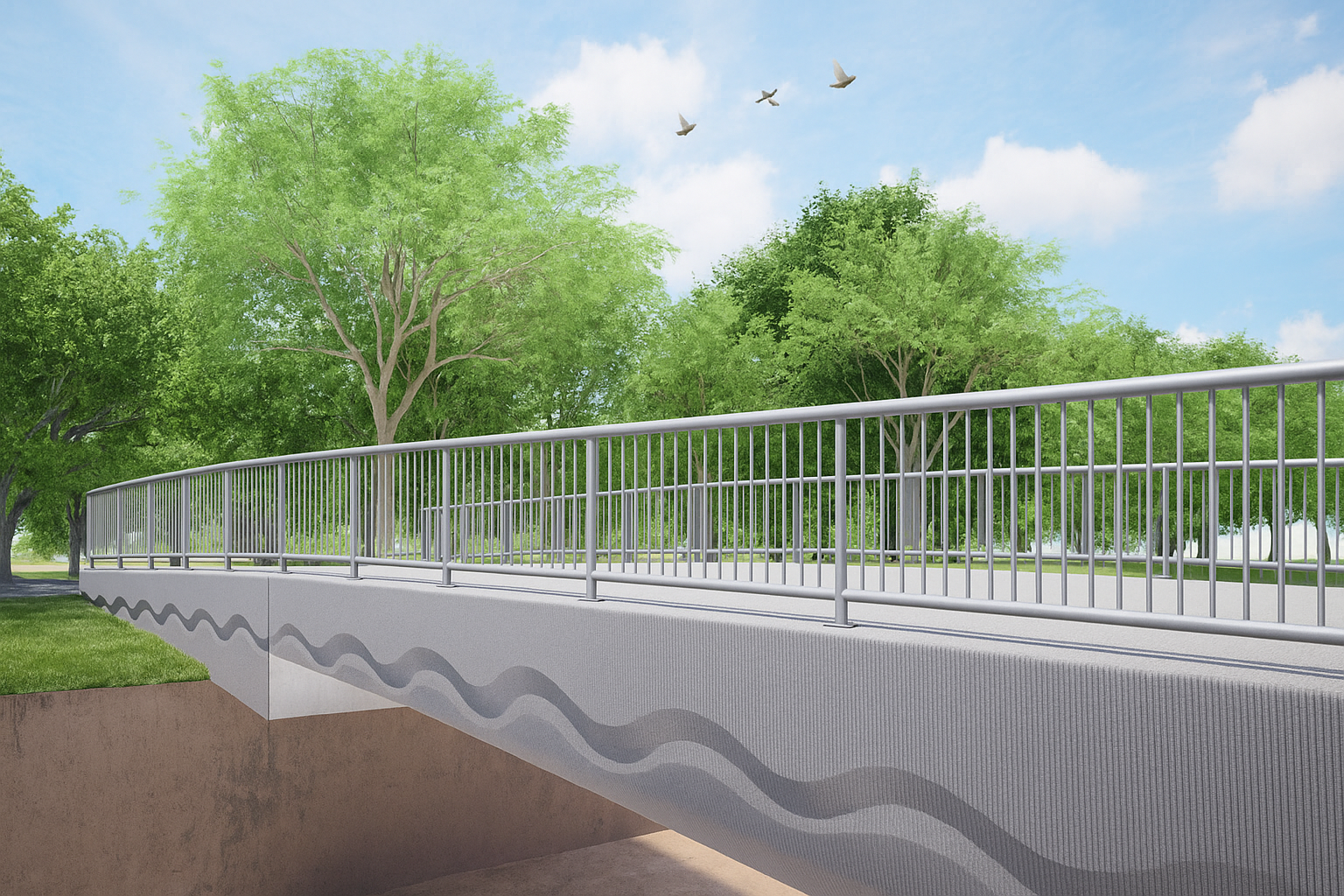
This project marks as a signigicant milestone for Singapore’s construction industry in the development of 3D Concrete Printing (3DCP) technology. It move beyond from prototypes to a functional, permanent structures by means of additive manufacturing.
The Prject
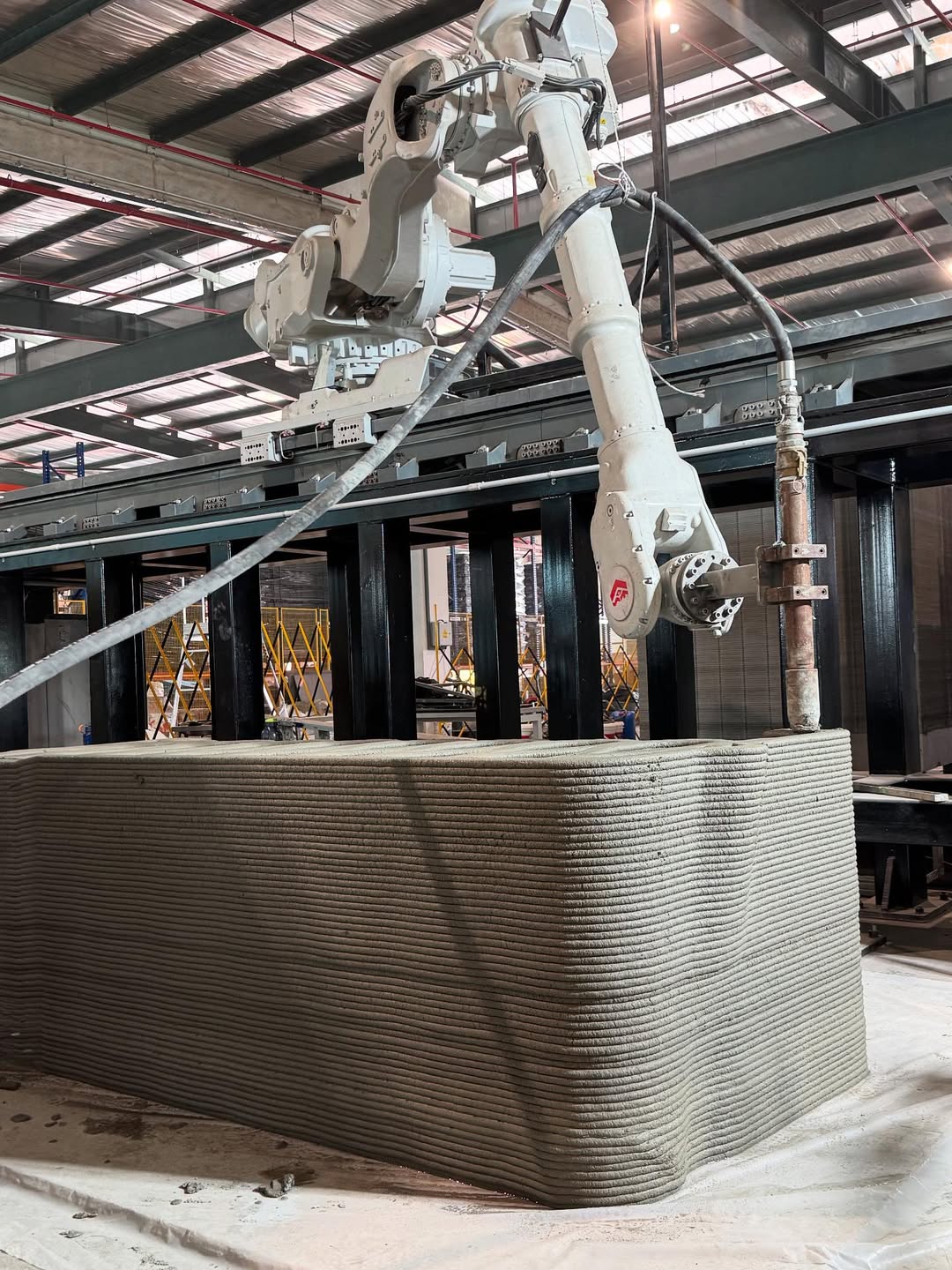
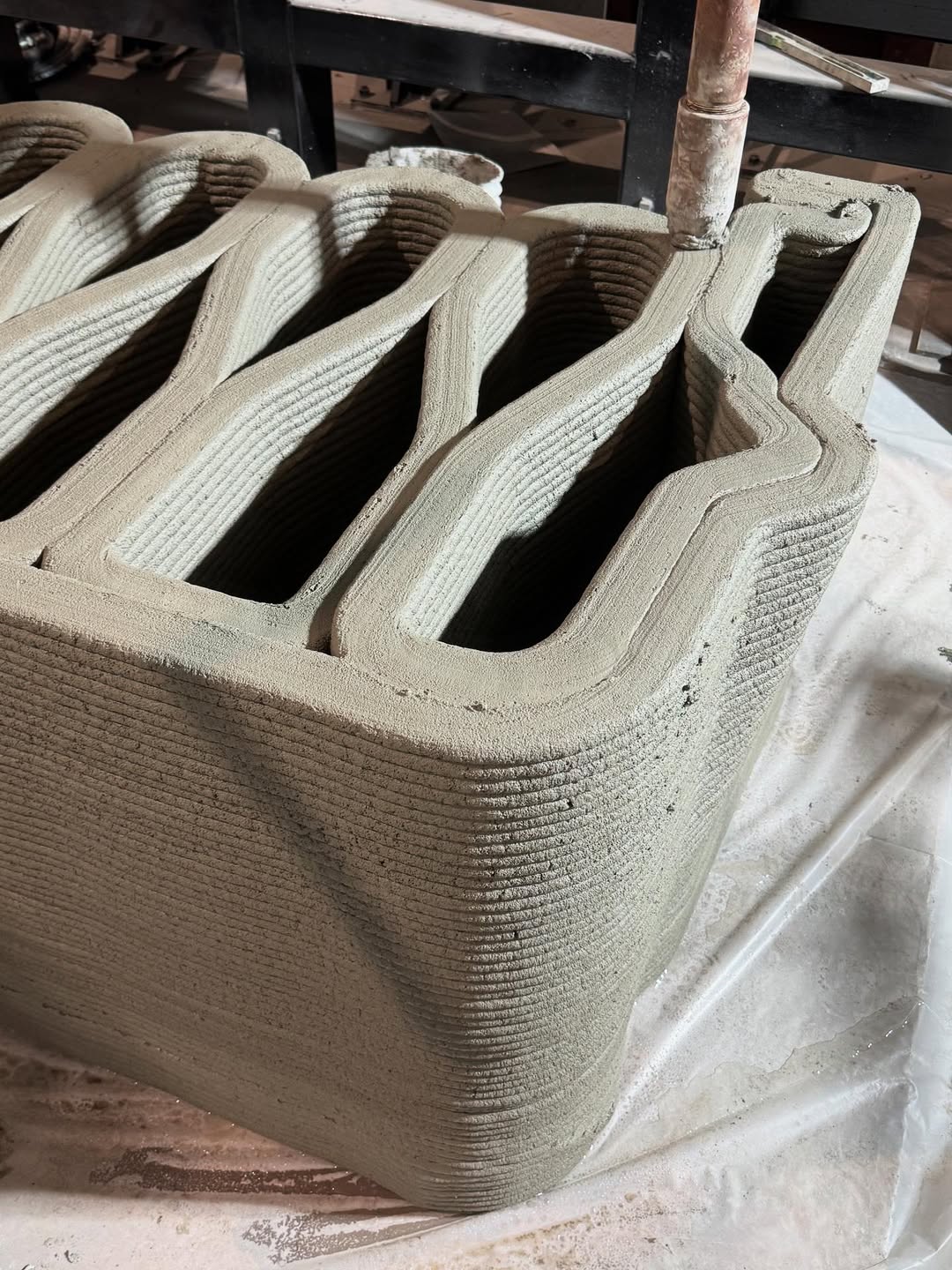
The bridge spans 10 meters across a canal and is designed as a fully structural 3DCP system. The load is carried entirely by the printed concrete itself. No conventional cast-in-place concrete and no rebar are used in the bridge deck, making this a true demonstration of 3D concrete printing as a primary structural solution rather than a formwork substitute.
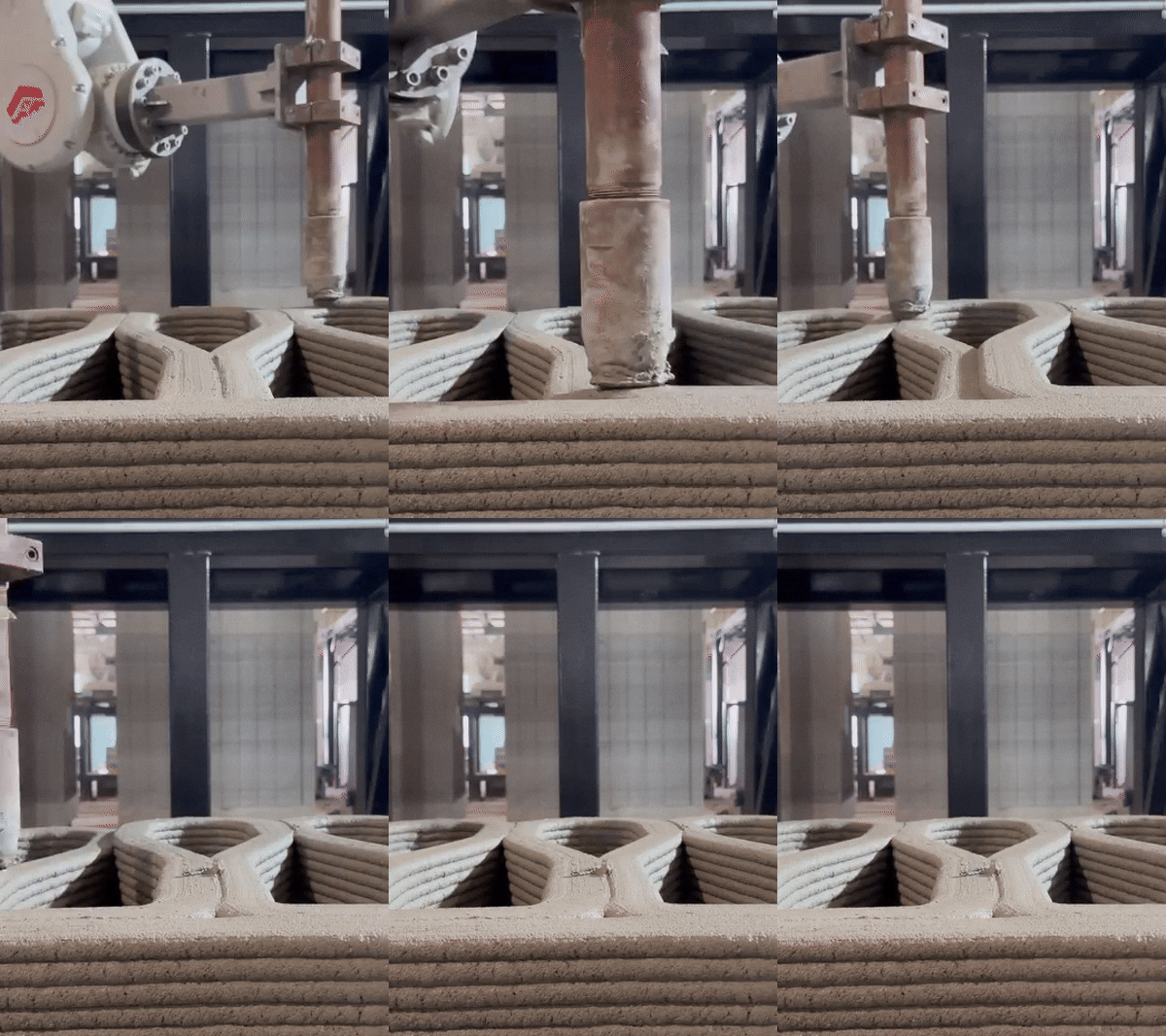
One of the key advantages of 3D concrete printing lies in its formwork-free construction. The printed material is engineered to gain sufficient early strength to support its own weight as well as the subsequent layers deposited on top. This characteristic is particularly relevant in Singapore, where formwork-related activities can account for 50–60% of the total concrete construction duration. Eliminating conventional moulds presents a significant opportunity to improve productivity, reduce labour dependency, and shorten construction timelines.
 |
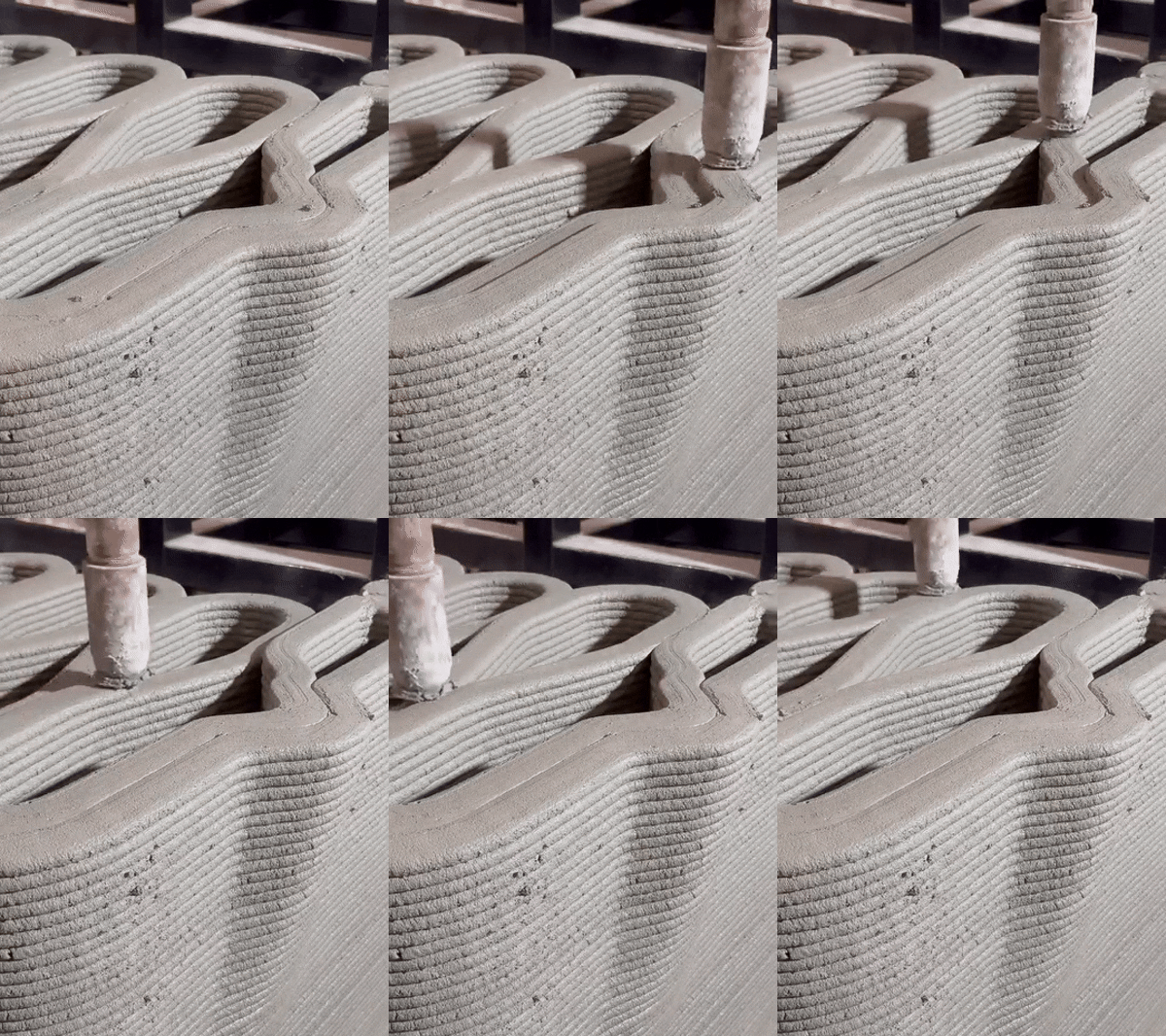 |
Challenge
However, the project also addresses a major challenge: there is currently no building code that directly governs load-bearing 3DCP structures. The layer-wise, dynamic nature of the printing process and the visible layer interfaces introduce structural behaviours that are not covered by existing concrete standards. To bridge this gap, the project focuses heavily on material development using locally available resources in Singapore, ensuring the printed concrete meets engineering benchmarks suitable for a permanent structure.
An extensive QA/QC framework has been established to ensure consistent quality across all printed bridge segments. In parallel, a design-by-testing approach is adopted, where material, fabrication and structural performance are validated through physical testing to demonstrate that the completed bridge meets safety and design requirements.
Parametric Modelling
To support this iterative development process, we developed an automated parametric bridge model. This model dynamically accounts for cross-section changes and allows the bridge design to be updated rapidly as new insights emerge from material development and fabrication trials. The benefit of this design approach is flexibility: even at the later stages of design, parameters can be adjusted and a fully updated design can be generated automatically. This supports tight integration between material development, fabrication constraints, and structural design.
The development of this parametric bridge model was featured in the Digitalisation Section of the Dutch journal Cement. The article was authored by Witteveen+Bos colleague Rayann Ajouz, who was named the 2025 Young Structural Engineer of the Year in the Netherlands.
This project represents a critical step toward mainstream adoption of 3D concrete printing for structural infrastructure in Singapore. One step closer moving from experimental 3DCP demonstrations to engineered, code-ready, permanent assets.
Design-by-Testing
Given the current lack of structural codes for 3DCP, a design-by-testing approach was adopted. Scaled-model load testing served as the primary means of verifying that the bridge satisfies its design requirements and logistic trials.
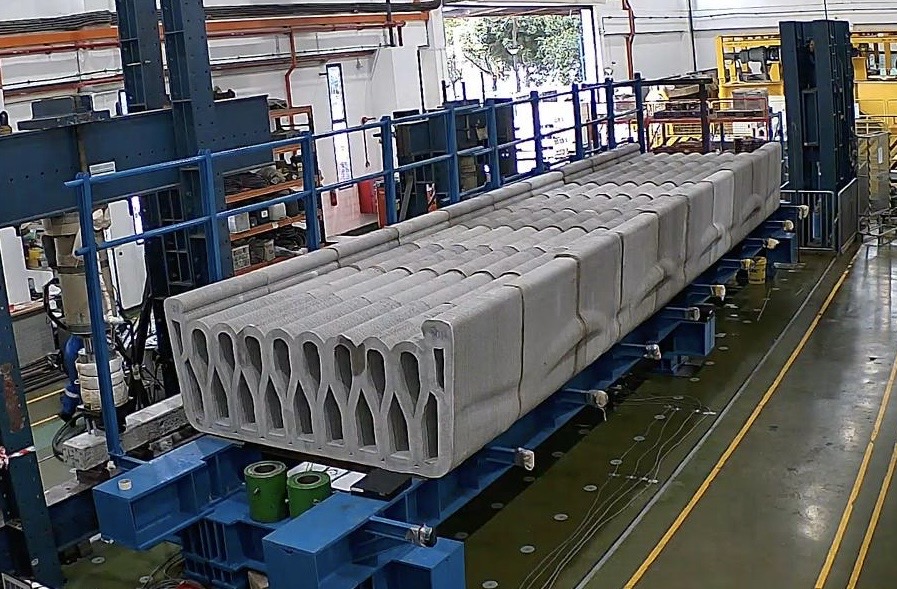
This project is witnessed by GOH KOK HUN, LTA Group Director in INFRASTRUCTURE DESIGN & ENGINEERING. It completed assembly of the model for the first 3D concrete printed bridge in Singapore.